A ToK curriculum has a life-span of 7 years. Search algorithms favour older information, especially at the start of a new assessment cycle. Watch for a few things to help decide if the advice is reliable (which is a very ToK sort of thing to do).
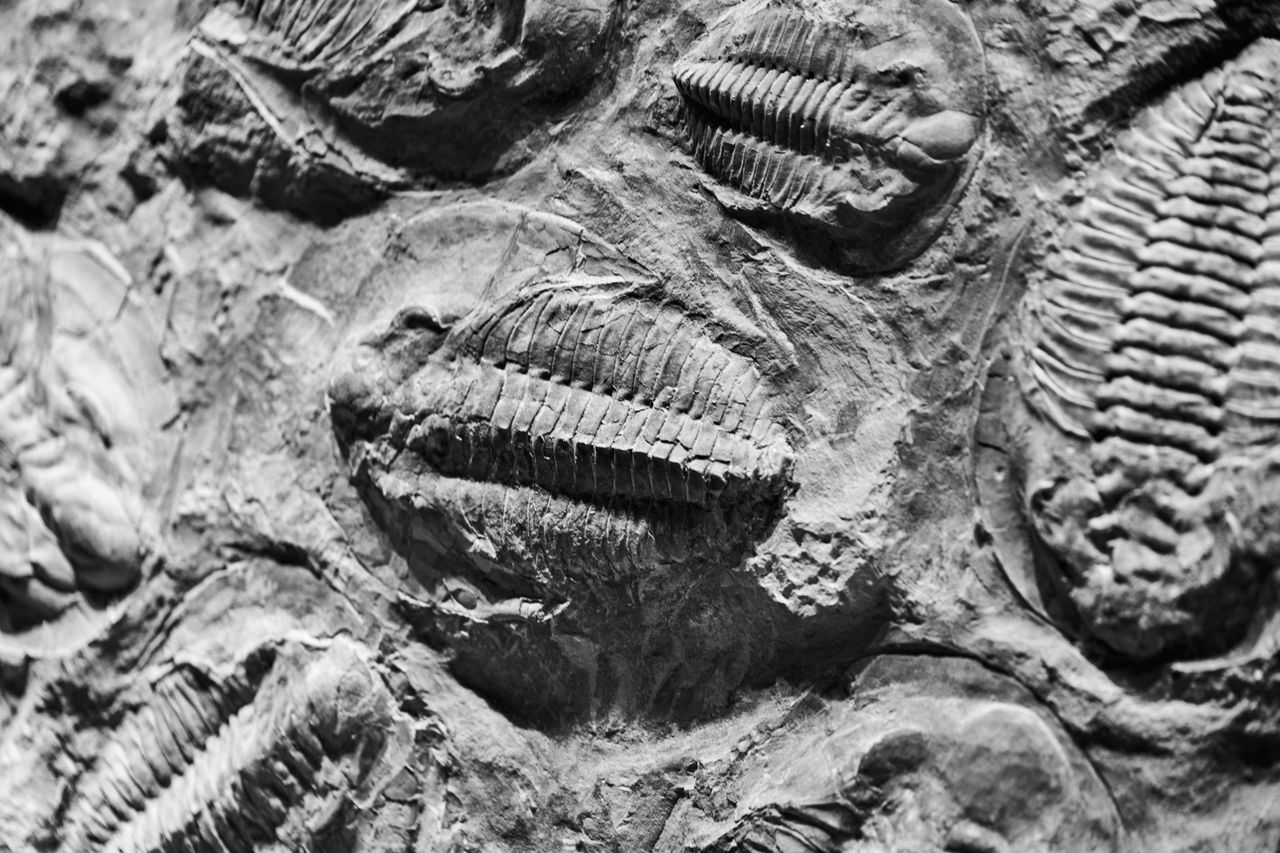
Geologists have a handy tool for dating rock: index fossils. Certain species lived for only a short window of time, so finding one in a rock layer tells us, with reasonable confidence, roughly when that layer formed. (Trilobites have done this job for a long time; they ask nothing in return.)
Online advice about the Theory of Knowledge essay has index fossils too. Search “how to write a ToK essay” and the results arrive in layers: some written for the current course, and many written for a course last assessed in 2022. Over 33 years in the classroom, a good share of them teaching ToK, I have watched students build essays on the older layers. They analyze a Way of Knowing in every paragraph, or go hunting for a “real-life situation” before the title has been unpacked.
None of this is flagged while the student writes. The essay reads as slightly off-target and the mark reflects it, usually without anyone explaining why. The useful skill, then, is learning to date a source before trusting it. Coincidentally, this is a very ToK sort of thing to do, so this is a good way to sharpen those in preparation for writing the essay itself.
Why the old layers stay on top
In geology, older layers usually sit at the bottom. Search results seem to invert that principle. A post from 2018 has had years to accumulate links and clicks, and search engines tend to reward that history by keeping it near the top.
Commercial tutoring sites also have little incentive to revise a page that already brings in traffic. Once a post performs well, it tends to be left alone.
Some of the older material comes from teachers, too. Resources get shared and passed down, and a handout written for the old course can circulate for years after the course changes. (I suspect a few of my own are still out there. I have chosen not to investigate.)
What changed in 2022
The current ToK course was first assessed in 2022. Several elements of the earlier structure were retired, and these are, perhaps predictably, the elements older guides depend on most. The table below sets the two layers side by side.
| Before 2022 | Current course |
|---|---|
| Eight Ways of Knowing (language, sense perception, emotion, reason, imagination, faith, intuition, memory) as an organizing framework | No longer an organizing framework |
| Eight areas of knowledge, including ethics, religious knowledge systems, and Indigenous knowledge systems | Five essay AOKs: history, human sciences, natural sciences, the arts, mathematics |
| Knowledge framework built around scope, language, methodology, historical development, and links to personal knowledge | Knowledge framework: scope, perspectives, methods and tools, ethics |
| Essay marked against a question about analysing knowledge questions | Essay marked on whether it gives “a clear, coherent and critical exploration of the essay title” |
| ToK presentation | ToK exhibition |
The presentation row may matter more than it first appears to. Many guides blend presentation advice with essay advice, and students who follow them tend to treat the essay as a talk built around one real-life situation. The two tasks have different purposes and are assessed differently.
One feature did not change in 2022: the essay has been marked holistically since 2015. A guide that refers to criteria A to D, then, belongs to an even deeper layer.
The index fossils: how to date a guide
We do not need a detailed history of the curriculum to date a guide; its vocabulary will usually do the job. Each item below functions as an index fossil for pre-2022 advice. If a guide contains any of them, it is reasonable to treat the rest of its advice with some caution:
[ ] Tells you to analyse a Way of Knowing in each paragraph [ ] Lists ethics, religious knowledge systems, or Indigenous knowledge systems as essay AOKs [ ] Mixes in advice about the ToK presentation [ ] Refers to essay criteria A, B, C, and D [ ] Says your essay should be built around a “real-life situation” [ ] Has no publication date, or a date before 2020
A single fossil does not make a guide worthless; it suggests the author has not yet caught up. Anything structural is worth checking against the current IB guide or your teacher. (Asking how a source knows what it claims to know is, of course, the central habit of ToK. Consider this early practice.)
What still holds up
Older layers are not without value. The core of a strong ToK essay has proven remarkably stable, and several pieces of long-standing advice remain as sound now as they were twenty years ago:
- Answer the exact title. Unpack its key terms, and examine the assumptions carried by words like “only” or “reliable.”
- Use examples you understand well. Then explain what each one reveals about knowledge; that second step is where most of the analysis happens.
- Take perspectives seriously. Consider why a knower would hold a view, then weigh which view is better supported.
- Ask “so what?” Consider what the argument implies for how we justify or trust knowledge.
Where an older guide makes these points well, its advice is worth keeping. The outdated scaffolding around it can be left behind.
What examiners reward now
The current assessment instrument asks a single question: does the essay offer a clear, coherent, and critical exploration of the title? Each of the three adjectives offers a useful lens.
Clear suggests the reader should always know what is being argued. Stating an interpretation of the title early tends to make the thesis visible from the opening paragraph.
Coherent suggests the essay should hold together as a single argument. Examiners read it as one piece, so each section ought to advance the answer. Two disconnected mini-essays (one per area of knowledge) rarely achieve this.
Critical suggests evaluation. Perspectives are weighed and examples tested for their limits until the essay can commit to a judgment. “Both sides have a point” becomes a judgment only when the essay can specify when, and why, each side holds.
This may explain why rigid templates struggle under the current instrument. A claim, counterclaim, mini-conclusion pattern can be a helpful planning tool (I used versions of it in class for years). Applied mechanically, however, it tends to produce essays that satisfy a structure while exploring very little, and examiners are well practised at noticing.
Leave the fossils in the museum
Students deserve advice written for the course they are taking now. That is the purpose of The ToK Cafe: coaching built on the current guide and informed by a few decades of watching students wrestle with these titles (and, often enough, win).
Grab the one-page index fossil checklist and keep it nearby while you research. And if a second reader for your title choice or draft would help, book a session with me (button below)
As for the old guides: fossils are wonderful things, and they reward careful study. They make poor guides to the present, though. Admire the Ways of Knowing by all means, then leave them in the museum, where the trilobites will be glad of the company.
At The ToK Café, we believe clarity isn’t just a skill - it’s a mindset.