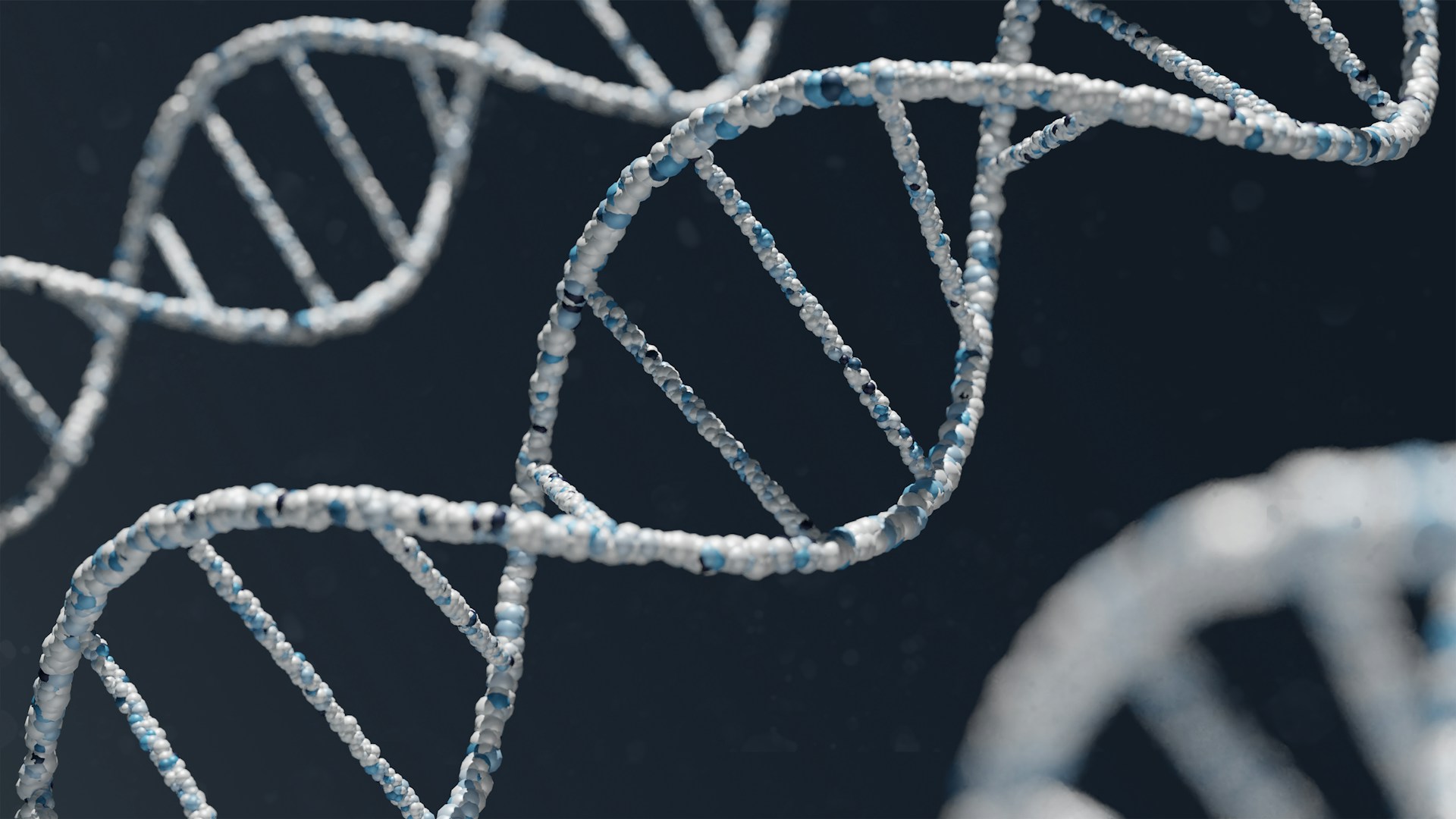
A gene is written in an alphabet of four letters, and the cell reads it three letters at a time. Change a single letter (a point mutation) and one of three things tends to happen. Sometimes nothing changes at all, because several three-letter “words” code for the same amino acid. Sometimes one amino acid is swapped for another, and the protein folds a little differently. And sometimes the change creates a premature “stop” signal; the result is the mRNA produced is not functional, or the peptide produced is a truncated version of the proper one. (I’m going to resist the urge to digress - my first degree was a B.Sc. in Genetics, and I still find it fascinating)
Theory of Knowledge prescribed titles behave in much the same way. Every word is there for a reason, and a single small change can produce a different question. Students rarely make these changes on purpose. They happen quietly, somewhere between reading the title and writing the first paragraph, and the essay ends up expressing the mutation.
This post offers a method for proofreading the title’s code before you build anything from it.
Why the small words matter
Examiners assess how well your essay explores this title. A student who answers a neighbouring question, however well, is likely to find the mark reflects the distance.
The drift almost always runs toward an easier, broader question. A title asking whether we are “too quick to assume” something becomes a question about whether that something is true. A title asking what we “need” becomes a question about what is useful. Each restatement feels harmless. Each one removes a piece of the tension the title was written to contain.
That is worth noticing, because the small words are usually where the title’s tension lives. Long nouns tell you the topic. Short words like “only,” “more,” “should,” and “too” tell you the argument.
How to unpack a ToK prescribed title: four steps
- Circle the small words. Look for absolutes, comparatives, and words of obligation. These are the letters most likely to mutate.
- Name the assumption each one carries. Ask what has to be true for the question to make sense as written.
- Ask who “we” is. Many titles speak of “we” or “us.” Experts, the public, students, and particular disciplines may relate to the same knowledge very differently.
- Restate the title, then run a mutation check. Write the question in your own words, and compare your version with the original word by word. Has anything been dropped, added, or softened?
A small reference table helps with the first two steps:
| Word type | Examples | Question to ask |
|---|---|---|
| Absolutes | only, always, never, inevitably | Would a single exception be enough to answer it? |
| Comparatives | more, most, stronger, too | Compared with what, and measured how? |
| Obligation | should, need, must | According to whom, and for what purpose? |
| The knower | we, us, our | Which knowers, and in which context? |
Worked example: unpacking a May 2024 title
The previous post in this series chose this past prescribed title using the tension test. Now we can open it up:
Are we too quick to assume that the most recent evidence is inevitably the strongest? Discuss with reference to the natural sciences and one other area of knowledge.
Taking the small words one at a time:
- “too quick” carries two assumptions: that we do make this assumption, and that the problem lies in the speed of making it. An essay might reasonably ask whether haste is the issue, or whether the assumption would be questionable at any pace.
- “assume” suggests something accepted without checking. That invites a useful question: in the natural sciences, do researchers assume newer evidence is stronger, or do they test it before accepting it?
- “most recent” sounds simple until we ask what is recent. The date of publication? The date the evidence was gathered? The date it reached the public?
- “inevitably” is the key to the whole title, and iy opens everything else up. Arguing that recent evidence is not inevitably the strongest is far easier than arguing it is not usually the strongest. A good essay notices which claim it is actually answering.
- “strongest” needs a measure. Strength might mean precision, replication, explanatory power, or the breadth of sources behind an account, and the answer may differ by area of knowledge.
- “we” could mean researchers, journalists, or the general public. These knowers may well answer the question differently.
What unpacking sounds like
A weaker unpacking:
The title is asking whether new evidence is better than old evidence.
A stronger one:
The title asks whether we accept recent evidence as necessarily the strongest without enough scrutiny. It assumes that we do make this assumption, and that “strength” can be compared across evidence of different ages. I will consider “we” to be both researchers and the wider public, since they may assume quite different things.
The weaker version reads smoothly, which is exactly why it is dangerous. Run the mutation check and four words have vanished: “too quick,” “assume,” and “inevitably” are gone, and “strongest” has become “better.” The question that remains is broader and much easier. It is also not the question the IB asked.
The stronger version keeps every word in play, names the two assumptions underneath the title, and makes a first decision about who “we” refers to. It has not yet defined its terms or chosen a final interpretation (the next two posts in this series deal with those). It has simply made sure the code is intact.
Questioning assumptions without rejecting the title
Unpacking often reveals an assumption you disagree with. That discovery is useful, and there is a legitimate way to use it.
A legitimate move might sound like this: “In some areas of knowledge, it is not clear that ‘we’ make this assumption at all, and exploring why tells us something about how those areas treat evidence.” That questions the title’s assumption while continuing to answer it.
A less successful move declares the title flawed and then writes about something else. Examiners are likely to read that as a student who has left the question behind, however elegant the escape. Don’t debate the title; engage with it!
The distinction is a fine one, but it matters. Questioning an assumption is part of answering the title. Replacing the title is a mutation.
Common traps
- Defining every word with a dictionary. Unpacking is about noticing assumptions. Definitions come next, and they work best in context. (More on that in the next post.)
- Silently dropping a word, usually the inconvenient one. In the example above, “inevitably” is the word most often lost, and it is also the one carrying the most weight.
- Adding a word. “Is recent evidence always stronger in science?” sounds close to the original. Two additions have quietly narrowed it.
- Unpacking forever. Some students circle, annotate, and re-annotate for weeks. At some point the code is proofread, and the protein needs building.
Try it: proofread your title
- Copy your chosen title out by hand. (Slowing down is the point.)
- Circle every absolute, comparative, word of obligation, and “we.”
- Beside each circled word, write one assumption it carries.
- Restate the title in a single sentence of your own.
- Swap restatements with a friend and run each other’s mutation check: can they spot what changed?
- Bring your unpacked title to your next conversation with your teacher.
Before you build
Next in this series: Defining Key Terms Without Reaching for a Dictionary.
A cell does not get to proofread its DNA before reading it; it lives with whatever the code says. You have the advantage. Ten careful minutes with a pencil can catch the mutation before it reaches the essay, and the question you answer will be the one the IB actually asked. (Nonsense, in this case, is entirely optional.)
At The ToK Café, we read every letter.